
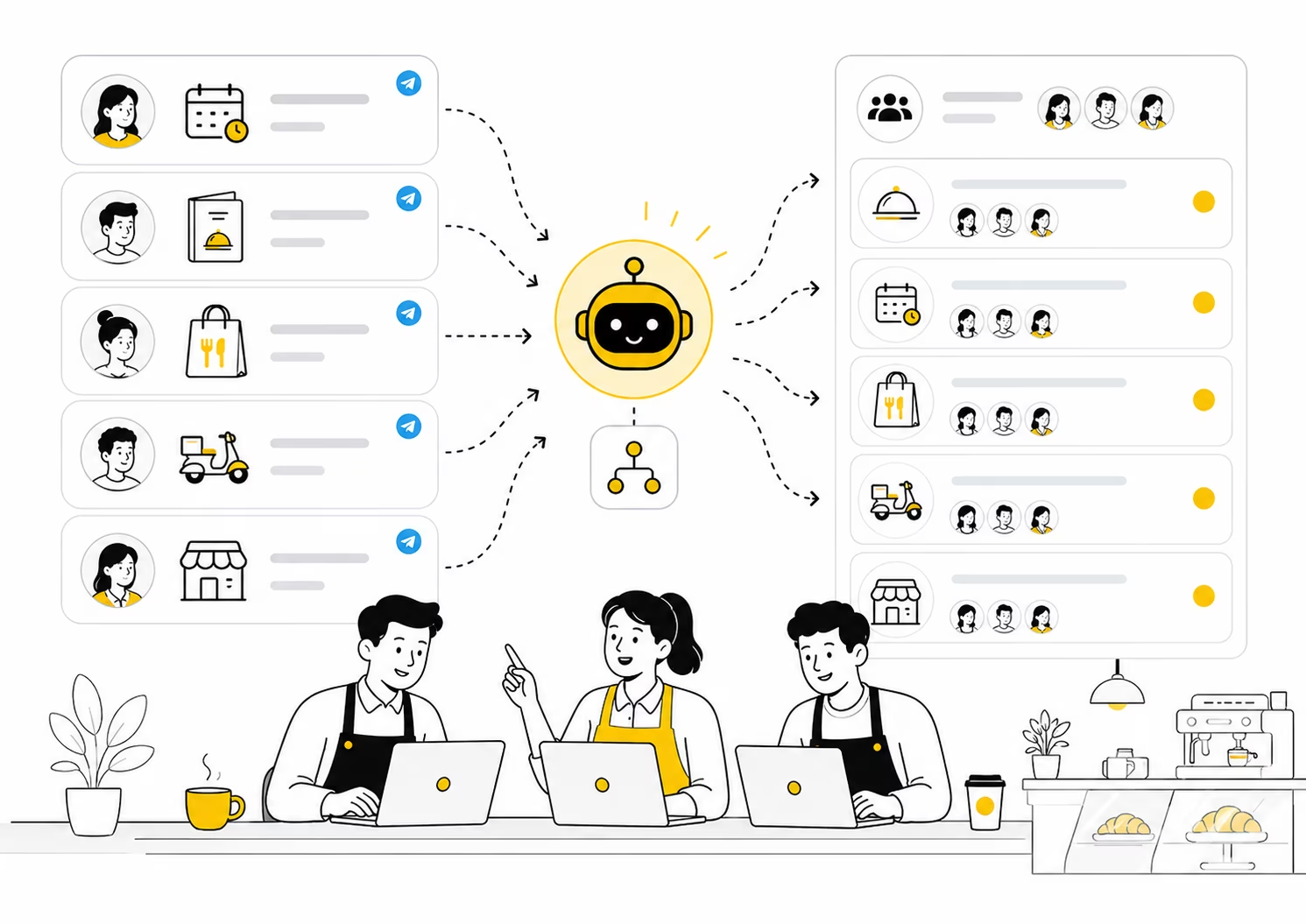
Telegram support for restaurants and cafes works best as a simple communication layer between customers and the people who can answer them, not as another restaurant CRM. Customers use one Telegram bot to ask about a table, opening hours, the menu, takeaway, delivery, an address or an existing order. Their messages appear in a private Telegram group where the owner, administrator and other employees can see the conversation and reply. Each customer has a separate topic, so a booking request does not disappear between staff discussions, supplier messages and photos of tonight’s dessert. The restaurant keeps its POS, reservation calendar and delivery tools, while Telegram becomes the organized place for quick customer conversations.
Restaurants and cafés are one local scenario; for the broader workflow, see Telegram support for local business.
| Customer message | What the customer needs | Who may need to answer | What goes wrong without a shared inbox |
|---|---|---|---|
| “Do you have a table for four tonight?” | A quick availability check and confirmation | Administrator, host or shift manager | The message stays in one employee’s personal chat |
| “Is this dish vegetarian?” | Accurate menu information | Administrator or kitchen employee | The customer receives a guess or waits too long |
| “Can I collect my order at 19:30?” | Pickup confirmation | Cashier, manager or kitchen | The request is seen but not passed to the right person |
| “Do you deliver to this address?” | Delivery area and price | Administrator or delivery coordinator | Different employees provide different answers |
| “One item is missing from my order” | Context, apology and a practical resolution | Manager or employee handling orders | The customer has to explain the situation again |
| “Are you open on the holiday?” | Correct current opening hours | Any informed employee | An outdated social media post becomes the source of truth |
Why restaurant messages become messy before the volume looks serious
Imagine a small restaurant at 18:20 on a Friday. The administrator is seating guests, the owner is checking a supplier delivery, the cashier has three takeaway orders waiting, and somebody’s phone vibrates with a message asking whether a table is available at 20:00. Five minutes later, the same customer asks whether a child seat is available, but the first message is now below a family chat, two staff messages and a photo from the kitchen. Nothing dramatic has happened, yet the booking already depends on one busy person remembering to return to a private conversation. The kitchen has enough things that can be on fire - customer messages do not need to join the list.
Restaurants often underestimate this problem because the individual questions look small. “Are you open?”, “Can I book?”, “Do you have this dish?” and “Where is the entrance?” do not look like support tickets, and they usually do not justify a formal CRM record. Together, however, they form a continuous operational inbox that follows the rhythm of the restaurant. The messages arrive when employees are least able to stop what they are doing, and the value of the answer often falls quickly with time. A reply about tonight’s free table is useful now and much less useful tomorrow morning.
The growth of takeaway, pickup and delivery makes this communication layer even more important. According to the National Restaurant Association’s 2025 research, nearly 75% of restaurant traffic in the United States now happens off-premises, while 94% of consumers describe speed as critical and more than nine in ten cite customer service as a top priority.[1] The exact percentages will differ between countries and restaurant formats, but the operational lesson is universal. A large part of the customer experience now happens before the guest enters the restaurant, or without the guest entering it at all. Questions about pickup time, delivery coverage and order status are therefore part of the service, not a side activity.
Even a modest number of messages can create visible losses. Suppose a cafe receives 20 customer conversations on a busy day and only one in ten requires another employee to check something. That already creates two handoffs involving menu availability, booking capacity, delivery or an existing order. If those handoffs happen through verbal reminders and screenshots, one missed detail per day becomes roughly 30 avoidable problems per month. This is not a market statistic - it is a simple workload example that shows why the system starts breaking much earlier than owners expect.
What customers actually ask a restaurant in Telegram
Table availability and booking details
A booking request rarely consists of one message. A customer may start with “Do you have a table tonight?”, then add the number of guests, preferred time, seating preference, a request for a child chair and a note that the group may arrive ten minutes late. If these details remain in one administrator’s private Telegram, another employee cannot confidently continue the conversation when the shift changes. A shared topic keeps the complete exchange visible and makes it clear what was requested and what the restaurant confirmed.
Telegram should not replace the restaurant’s actual reservation calendar when one is needed. The employee still checks the calendar, table plan or familiar paper book and records the confirmed reservation there. Telegram handles the conversation around the booking, while the booking system remains the source of truth. This separation prevents the common mistake of expecting one lightweight communication tool to become a calendar, POS, CRM and table-management platform at the same time. A good system does one job clearly instead of performing six jobs badly.
Menu questions and current availability
Customers ask questions that a static menu cannot always answer. They want to know whether breakfast is still available, whether a dish is spicy, whether a dessert contains a particular ingredient, whether a daily special is still in stock or whether a portion can be changed. Some questions can be answered from prepared information, while others need a quick check with the kitchen. The important point is that the employee should be able to ask internally without losing the original customer conversation.
Prepared replies are useful for repeated questions, but restaurant staff should not treat them as unquestionable truth. Opening hours change, menu items sell out and delivery areas may depend on the day or workload. Information about ingredients and allergens must come from the restaurant’s current verified data, not from an employee’s memory or an enthusiastic guess. Fast support is valuable, but a confidently incorrect answer is simply a faster way to create a problem.
Takeaway, pickup and delivery questions
Takeaway conversations are usually operational and time-sensitive. Customers ask whether they can order directly, when food will be ready, where to collect it, whether they can change the pickup time, whether the restaurant delivers to a particular address and what to do if the courier is late. These questions do not necessarily require a sophisticated ordering platform, especially in a small restaurant with a limited menu and local customer base. They require the right employee to see the message and answer with current information.
A delivery platform can remain the main place where orders are created and paid. Telegram can then handle questions that do not fit neatly into the platform’s standard flow, such as clarifying an entrance, checking a delayed order or correcting a pickup time. Alternatively, a restaurant may take simple direct orders through conversation and enter the final order into its normal internal system. Both approaches can work, but the staff must know where the official order record lives.
Opening hours, address and practical details
Some of the most valuable messages are also the least exciting. A tourist asks which entrance to use, a local customer checks holiday opening hours, a parent asks whether there is space for a stroller, and someone collecting takeaway cannot find the restaurant. These are often purchase-ready customers who need one piece of information before acting. Sending them to search through old social posts is technically possible, but it is not especially hospitable.
The team can prepare accurate answers for directions, parking, opening hours and common facilities while still leaving room for a human reply. When information changes, one current internal note can be updated instead of relying on each employee to remember the new version. This is particularly useful for restaurants in tourist areas, food courts, hotels and buildings with entrances that appear to have been designed as a small puzzle. A fast practical answer can be more valuable than a long promotional message.
Questions about an existing order
Post-order messages require context. The customer may report a missing item, ask why an order is delayed, change the pickup name or refer to a conversation from the previous day. When different employees see different fragments, the customer has to repeat the order number, issue and previous promise. In Sinch’s 2025 communication research, a combined 80% of consumers reported a negative reaction when they were asked to repeat information during a support conversation.[2] A shared conversation history does not solve the underlying order problem, but it prevents the restaurant from adding a second problem by forgetting what the customer already explained.
How Telegram support for restaurants and cafes should work
The cleanest setup gives customers one public contact while keeping internal work private. A customer opens the restaurant’s Telegram bot and writes a normal message. GramDesk routes that message into a private Telegram group and creates a separate topic for the conversation. An available employee replies inside the topic, and the answer returns to the customer through the bot. The customer does not enter the restaurant’s internal group and does not need the personal Telegram username of the owner or administrator.
Consider a practical booking conversation. A customer writes, “Can I reserve a table for four at 19:00?” and a new topic appears in the support group. The administrator checks availability and replies, while another employee can see that the request is already being handled. If the customer later changes the time to 19:30, the update appears in the same topic instead of becoming a second disconnected conversation. During a shift change, the next employee can read the history instead of asking the customer to start again.
This setup is especially helpful when restaurant support is shared between two to five people rather than handled by a dedicated call center. The owner, manager, host and cashier can all be members of the private group without each person requiring a separate paid helpdesk account. GramDesk is currently priced per active bot at approximately $0.10 per day, or around $3 per month, with unlimited teammates.[3] The low price matters because a small cafe should not have to buy enterprise software simply to let a second employee answer “Yes, we are open until 22:00.”
For the broader workflow, see Team Customer Support in Telegram. It explains how shared history, responsibility and handoffs work when more than one person answers customers.
Handle restaurant questions from one Telegram group
Connect your restaurant bot, invite the team and test the complete customer-to-reply flow before changing any of your existing booking or ordering systems.
Why publishing the owner’s personal Telegram eventually stops working
Using a personal Telegram account is the fastest possible starting point. There is no setup, customers feel that they are speaking directly with the owner, and the owner can answer wherever they are. This remains a reasonable option for a tiny operation where one person handles every conversation and is comfortable making a private account publicly available. The problem begins when another employee needs to help, because the conversation history, customer relationship and responsibility remain tied to one person’s phone.
Personal messaging also creates an expectation problem. A customer who has the owner’s personal username may continue writing at night, contact the same account about every future order or bypass the restaurant’s normal process when an employee gives an answer they do not like. The owner then has to choose between ignoring a visible personal message and becoming permanently available. A dedicated business bot sets a clearer boundary without making the conversation feel formal. The restaurant remains easy to reach, but the support channel belongs to the business rather than one individual.
The use case on separating personal and work messages explains this difference in more detail. It is relevant even when privacy is not the original reason for changing the workflow, because better separation usually becomes valuable as soon as several employees participate.
The realistic alternatives - and where each one wins
Phone calls
Phone calls are still useful for urgent, emotional or complicated situations. A customer arranging a large group dinner may prefer to talk, and a serious problem with an order can often be resolved faster by voice than through ten short messages. The drawback is that a call creates little shared written context unless an employee records the result manually. Calls should therefore remain available where they are useful, but they do not have to be the only way to ask whether takeaway is ready.
A simple division works well for many restaurants. Telegram handles short operational questions and creates written context, while phone calls remain available for urgent cases and complex arrangements. The goal is not to force every customer into one channel. The goal is to prevent every channel from becoming an isolated pocket of information.
Instagram and other social media messages
Social media messages are convenient because customers may discover the restaurant there. A person sees a dish, asks whether it is available and expects an answer without leaving the app. The disadvantage is that these conversations can be scattered across personal accounts, business profiles and different employees who have access to the social page. Social media can remain an entry point, but the restaurant needs a clear decision about which channel is used for ongoing operational support.
One practical approach is to answer simple discovery questions directly and guide booking, order or delivery conversations to the restaurant’s support bot. This avoids turning every public social profile into a second support inbox. The transition should be polite and purposeful, not “please contact us somewhere else because this account is inconvenient.” A better message explains that the Telegram support chat is where the team can check availability and preserve the conversation.
WhatsApp may be the preferred customer channel in many countries, and asking those customers to install or switch to Telegram can reduce conversion. In that situation, the restaurant does not have to choose the messenger based only on the team’s internal preference. GramDesk can connect WhatsApp through Twilio so customers remain in WhatsApp while employees reply from Telegram. The technical setup is more involved than connecting a Telegram bot, but it can unify the internal workflow without forcing customers to change habits.
The existing guide on connecting WhatsApp to Telegram describes the integration and its requirements. A restaurant should add this only when WhatsApp demand is real, rather than building an omnichannel system because the word sounds impressive in a presentation.
Booking and delivery platforms
Dedicated booking and delivery platforms are the right choice when the restaurant needs structured availability, payments, courier management, automated confirmations or marketplace discovery. They reduce manual work and provide records that a conversational inbox is not designed to create. Their weakness is not that they are “too complicated,” but that they solve a different job. Customers will still ask questions that fall outside a standard form or order status screen.
Telegram can sit beside these platforms rather than competing with them. The booking system records the table, the delivery system records the order, and the Telegram topic contains the surrounding human conversation. This division is usually safer than trying to recreate a delivery platform through chat messages. It also gives staff a clear answer when somebody asks, “Where should I check the real order status?”
A full CRM or helpdesk
A full helpdesk becomes useful when the restaurant operates many locations, handles a high support volume, needs strict routing, measures response SLAs or runs a centralized customer service department. A CRM may also be justified when conversations need to feed loyalty, marketing and sales processes. These systems provide automation and reporting that a Telegram group cannot replace. They also require configuration, employee adoption and usually per-agent spending.
For a single restaurant, cafe or small chain, the immediate problem is often much simpler. The business needs messages to be visible, separated by customer and answerable by several employees. Installing a large system before this basic workflow is understood can produce a beautiful dashboard that nobody checks during the dinner rush. Telegram with a shared inbox is the middle option between personal-chat chaos and formal support infrastructure.
Simple rules that make the workflow reliable
Give customers one clear contact
A restaurant can promote its support bot on the website, menu, social profiles, booking confirmation, takeaway packaging and Google Business profile. These are several entry points, but they should lead to the same business contact rather than to different employees. One button to the owner, another to the administrator and a third to an abandoned bot merely creates a more decorative form of chaos. Customers should know where to ask a question and where to return later for a follow-up.
The button text should describe the action clearly. “Ask about a table in Telegram,” “Message the restaurant” or “Ask about takeaway” is more useful than an unexplained Telegram icon. If the restaurant has a website, the free Telegram Button Generator can create a visible entry point. WordPress users can also follow the existing guide on how to add a Telegram button to WordPress.
Decide who gives the first reply
A shared inbox does not automatically create responsibility. When four people see a new topic, all four may assume somebody else will answer, producing a very collaborative form of silence. The restaurant should decide who watches new messages during each shift and when another employee should be involved. This rule can remain simple enough to explain in one minute.
For example, the administrator gives the first reply to booking, hours and address questions. The kitchen is involved only when current menu information is required, while the manager handles complaints and unusual delivery issues. Employees do not need complex ticket assignments for this structure to work. They need a clear first owner and permission to ask the right colleague.
Use prepared answers as a starting point
Opening hours, address instructions, delivery areas and basic booking questions often repeat. Preparing accurate answers saves time and makes the restaurant sound consistent even when different employees reply. The message should still feel like a human response and should be adjusted when the customer’s situation differs. Copying an answer that does not match the question is faster only in the same way that sending food to the wrong table is faster.
Prepared replies should also have an owner and a review date. Holiday hours, prices, menu availability and delivery conditions change, so old answers should not become invisible policy. A small restaurant may need only a shared internal note with ten reliable responses. The value comes from accuracy and consistency, not from building a giant knowledge base.
Keep the official record in the correct system
When a customer confirms a table, the employee must still put the booking into the restaurant’s reservation system. When an order changes, the official order must be updated in the POS or delivery platform. Telegram preserves the conversation but should not become an unofficial database that only experienced employees know how to interpret. This boundary makes the lightweight setup safer.
A useful rule is that Telegram answers the question, while the operational system records the action. “Can we move the booking to 20:00?” is a conversation in Telegram, but the confirmed change belongs in the booking calendar. “Please remove one item” is discussed in Telegram, but the actual order must be updated where the kitchen and payment record can see it. The distinction prevents polite messages from drifting away from restaurant operations.
What this setup does not replace
GramDesk is not restaurant CRM software, a POS, a table planner, an online ordering platform or a delivery management system. It does not decide whether a table is available, update an order automatically or tell a courier where to go. It gives the team an organized place to receive a question, see its history and send an answer. This narrow role is a benefit when the restaurant already has working operational tools and only needs to stop losing conversations.
It is also not intended to automate every interaction. Customers often contact a restaurant because their question does not fit the normal flow, and that is precisely where a competent human answer is useful. Automation can greet the customer, provide basic information or collect an order number, but it should not become an obstacle between the customer and the employee who can solve the issue. The restaurant needs fewer dead ends, not a more sophisticated collection of them.
When a shared Telegram inbox is the right choice
The setup fits a restaurant, cafe, coffee shop, bakery or small takeaway business when customers already use Telegram, two or more people may answer, and the main conversations are short operational questions. It is especially useful when the owner wants to stop publishing a personal account, employees work in shifts and a full helpdesk would be excessive. The business should already have, or be willing to create, one public Telegram bot as the customer contact. The internal team can then keep working in the familiar Telegram app.
It may not be sufficient for a large restaurant group with centralized support, detailed agent permissions, strict service-level reporting and complex multi-location routing. It also will not solve an unreliable booking process, inaccurate menu information or poor delivery operations. A shared inbox improves communication around the process, but it cannot repair the process by itself. The right expectation is better visibility and faster handoff, not magical restaurant automation.
How to start without rebuilding the restaurant’s systems
Start by choosing one narrow communication scenario. Table questions, takeaway support or general customer enquiries are better starting points than moving every possible conversation at once. Create a Telegram bot, connect it to GramDesk, create a private support group and enable topics so each customer has a separate conversation. The complete technical sequence is available in the Telegram support bot setup guide.
Next, add only the people who actually need to answer and agree on first-reply responsibility. Test five realistic situations before publishing the link: a booking request, a menu question, a changed pickup time, an address question and an order problem. Check that another employee can continue each conversation without asking what happened earlier. This test reveals workflow problems much faster than discussing an abstract support strategy.
Finally, place the bot link where real questions begin. A restaurant website may need it near the menu, booking information, delivery section and contact details rather than only in the footer. Social profiles can use the same contact, and printed takeaway materials can include a QR code or short link. The channel becomes useful only when customers can find it at the moment they need an answer.
Organize restaurant messages without adding a restaurant CRM
A restaurant does not need enterprise customer service software to answer a table question correctly and on time. It needs one visible customer contact, shared context for the team and a clear rule for who responds. Telegram can provide the familiar customer conversation, while a shared inbox prevents those conversations from living inside one employee’s personal account. Existing booking, ordering and delivery systems remain responsible for restaurant operations.
The best next step is to look at the complete local business workflow rather than treating restaurant support as an isolated technical integration. It shows how bookings, pickup requests, service questions and customer follow-ups can move through one organized Telegram inbox while the team continues using its normal operational tools.
See how GramDesk works for local businesses
Explore the complete workflow for bookings, service questions, pickup requests and customer follow-ups without adding a heavy CRM.