
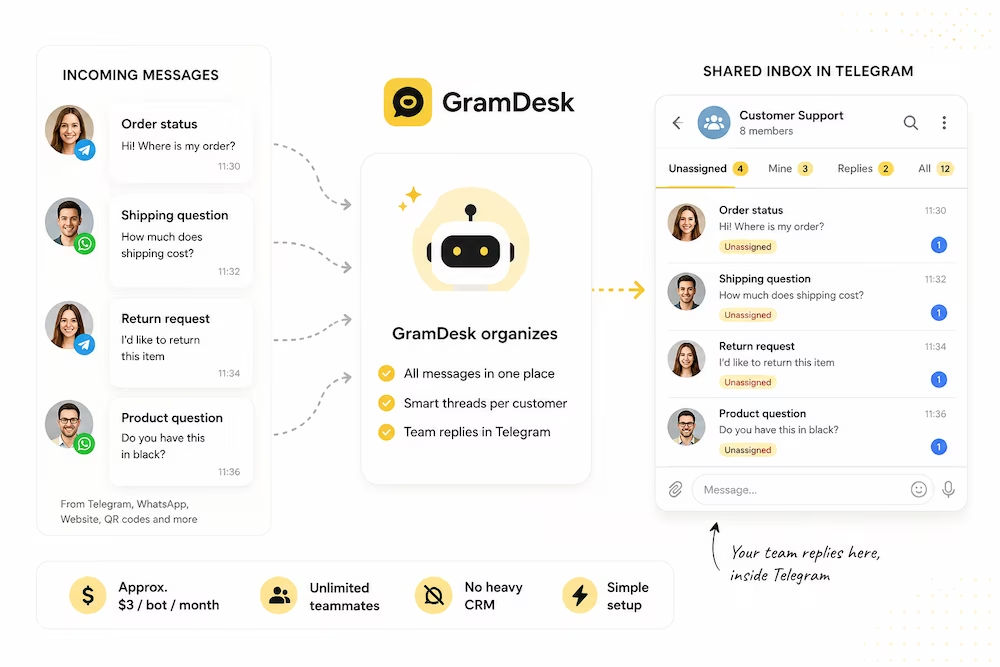
Customer support without CRM works best when a small team does not need a full sales pipeline, complex automation or a paid seat for every teammate, but still needs one organized place to receive, discuss and answer customer questions. For many small businesses, the real problem is not “lack of CRM”; it is scattered conversations across personal Telegram chats, WhatsApp, email, Instagram DMs, screenshots and forgotten message threads. A lightweight Telegram-based support inbox can give the team enough structure to stop losing requests, avoid duplicate replies and keep customer context visible without forcing everyone into a heavy platform. This is especially useful for online stores, service businesses, small SaaS products, creators, agencies and local teams where support is handled by 2-10 people, not by a dedicated support department with managers, analysts and dashboards.
| Situation | What usually happens | Better lightweight approach |
|---|---|---|
| One owner answers all clients personally | Messages mix with family chats, friends, suppliers and random notifications | Move customer questions to a business bot and answer from a shared Telegram group |
| Two or three teammates start helping | Nobody knows who already replied, and customers sometimes receive two different answers | Use shared conversations, internal discussion and simple ownership rules |
| The team considers CRM | Setup feels too big for the actual support volume | Keep CRM for sales pipeline later, but organize support first |
| Customers write from different places | Context gets split between messengers, website forms and inboxes | Route support conversations into one operational place |
| Business grows slowly | Tools with per-agent pricing become annoying before they become useful | Use a no-per-agent support layer while the team is still small |
Why small teams look for customer support without CRM
A small business usually does not wake up one morning thinking, “We need a customer communication platform.” It starts much more simply. One customer asks about delivery, another asks whether the product is still available, someone wants to change an appointment, and a returning customer writes directly to the owner because “you answered me last time.” At first this feels nice, almost personal, because the business is still close to every customer and every message looks manageable. Then Monday arrives, the owner is driving, the assistant replies from memory, the designer sends a screenshot, and someone discovers that the angry customer was actually answered yesterday - in a different chat, by a different person, with a different promise.
This is the moment when many teams start thinking about CRM, but CRM is often not the first missing piece. A CRM is useful when you need leads, deals, stages, sales history, follow-up tasks, pipelines, reports and a structured commercial process. Customer support is different: the team needs to see the question, understand the context, decide who replies and send a clear answer quickly. If there are only a few teammates, the cost of implementing a full CRM can be higher than the problem itself. It is like buying a restaurant kitchen because you need to make better sandwiches in the office.
The pain is still real, though. Without structure, small teams lose requests not because they are lazy, but because personal messengers were never designed as shared customer support systems. A private chat is good for one person and one conversation, but it becomes fragile when three people need to know what happened. Email has threads, but customers often prefer messengers and response speed matters. Spreadsheets can track issues, but nobody wants to copy every Telegram message into a spreadsheet unless they enjoy administrative cardio.
Customer support without CRM does not mean support without structure
The biggest mistake is to treat “without CRM” as “without rules.” A small team can skip heavy software, but it cannot skip ownership, visibility and a basic process. Someone must know which conversations are new, which ones need a reply, which teammate is handling the customer and where the full history is stored. The point is not to create bureaucracy. The point is to remove the little daily accidents that make customers feel ignored.
For example, a small online store may receive only 20-40 customer questions per day. That does not sound like much until those questions are split between the owner’s Telegram, the manager’s WhatsApp, an Instagram inbox, a website form and two email addresses. In raw volume, the business is still small; operationally, it already behaves like a messy support department. The team does not need enterprise software for that. It needs one shared place where incoming conversations appear, teammates can coordinate and replies go back to the customer without exposing anyone’s personal account.
This is where a lightweight shared inbox makes more sense than a full CRM. The customer writes to a Telegram bot, or another connected channel, and the team answers from one private Telegram group. Each conversation can stay separate, the context is visible and the team does not have to switch into a separate helpdesk all day. The owner still feels close to the customer, but the business no longer depends on one person’s personal chat list. That is a small change technically, but a very big change emotionally - especially for the owner who used to wake up to 17 unread customer messages between memes and family voice notes.
What a CRM gives you - and why it may be too early
A CRM can be very useful when your business has a long sales cycle. If you sell B2B services, expensive equipment, real estate, consulting packages or custom projects, then pipeline stages, lead sources, deal value and scheduled follow-ups matter. You want to know who is a new lead, who received a proposal, who needs a call next week and which channel brought the customer. In that case, CRM is not “too much”; it is the commercial memory of the business. Removing it would be a mistake.
But many small support teams are not dealing with complex deals. They are answering practical questions: “Where is my order?”, “Can I book tomorrow?”, “Do you have this in black?”, “Can I change the delivery address?”, “Why can’t I access the course?”, “Is this service available in my city?” These messages need speed, clarity and shared visibility more than pipeline management. If you force this kind of support into CRM too early, the team may spend more time filling fields than helping customers. The customer does not care that the ticket has a perfect lifecycle stage if nobody answers for three hours.
There is also the pricing problem. Many helpdesk and CRM tools charge per user, which is logical for enterprise software but painful for small teams. A business may have one owner, two assistants, one part-time operator and a freelancer who only helps on weekends. Paying for every seat just so people can read and reply to messages feels strange when the support process itself is still simple. Small businesses do not hate software. They hate paying enterprise-style prices for a problem that could be solved with a cleaner workflow.
The practical alternative: Telegram as a shared support workspace
For many small teams, Telegram is already where work happens. Owners talk to suppliers there, teams coordinate there, customers may already prefer it, and notifications are hard to miss. The weak point is not Telegram itself; the weak point is using personal Telegram accounts as the official support channel. When customers write directly to the owner or manager, the business loses privacy, control and continuity. If that person is offline, sick, busy or simply tired, the support line quietly disappears with them.
A better model is to put a Telegram bot between the customer and the team. The customer sees a business support bot, not the owner’s personal profile. The team sees incoming conversations in a private Telegram group, where several teammates can reply, discuss internally and keep context in one place. This keeps the speed and comfort of Telegram, but adds the missing business layer. It is not trying to become Salesforce in a hoodie; it is just making Telegram usable for real customer support.
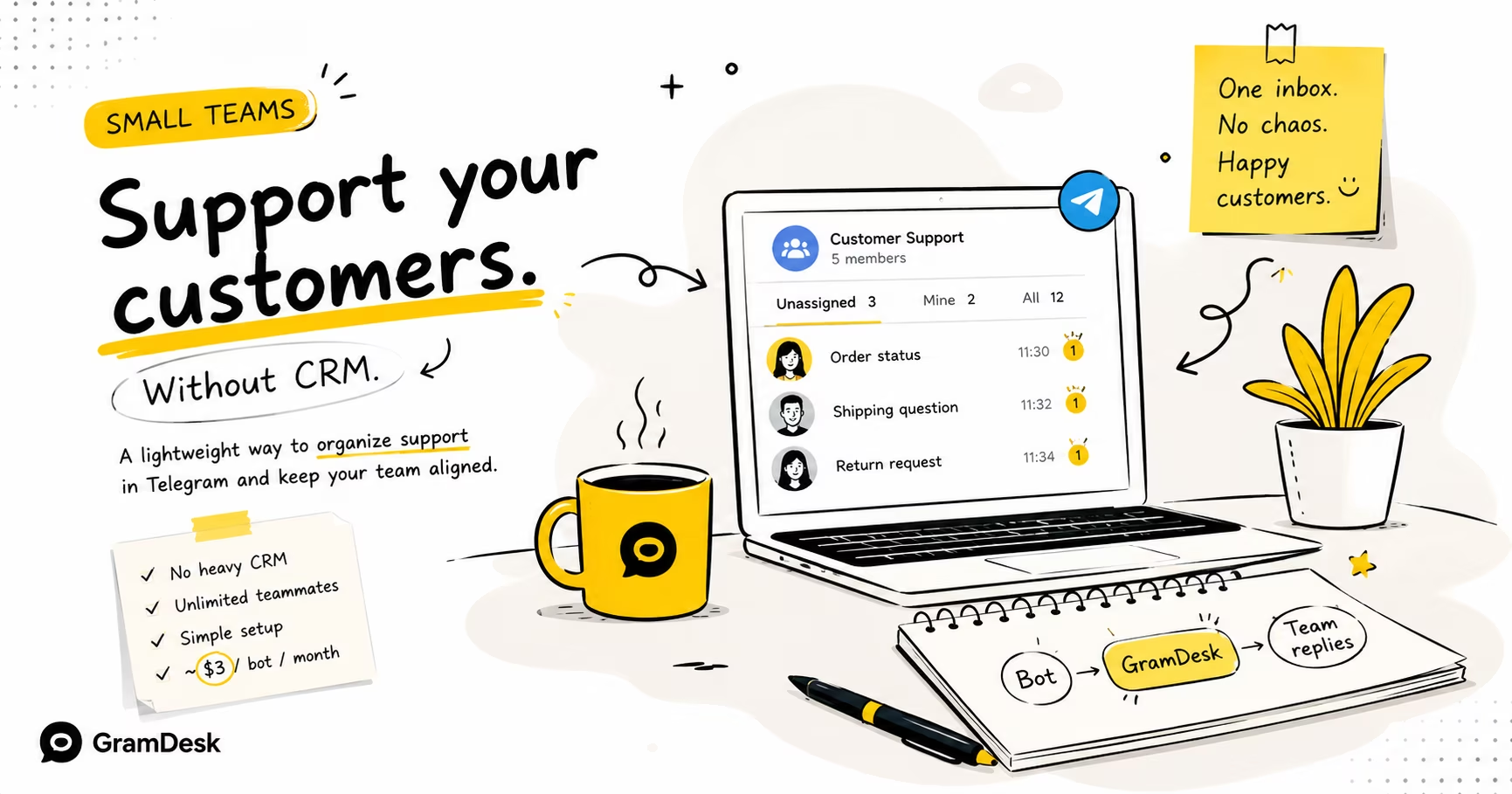
This is also where GramDesk fits naturally. GramDesk turns Telegram into a shared support inbox for small teams, with a setup that is closer to connecting a bot than implementing a helpdesk project. The core idea is simple: customers write to your bot, GramDesk creates an organized conversation, and your team replies from Telegram. You can keep the support process lightweight, invite teammates without turning every new helper into a new software bill, and avoid the classic “who answered this customer?” detective story. For small teams, that is often enough to move from chaos to control.
When customer support without CRM is the right choice
Customer support without CRM is a good choice when your conversations are frequent but not structurally complex. You need to answer quickly, share context, avoid duplicates and make sure requests do not disappear. You do not yet need deal forecasting, sales automation, complex segmentation or a manager who spends Fridays building dashboard reports. In other words, you need operational clarity, not a corporate command center.
This approach fits especially well when the team already lives in Telegram and customers are comfortable messaging there. A local service business can receive appointment questions, an online store can handle delivery and returns, a small SaaS can answer access questions, and an agency can keep client requests out of personal chats. In each case, the support flow is conversational, not pipeline-heavy. The customer wants an answer, not a perfectly categorized record in a system nobody checks.
There are still limits. If your team needs strict SLAs, multi-level escalation, legal audit trails, large-scale reporting, phone support, complex permissions and integrations with many internal systems, then a dedicated helpdesk or CRM may be the better foundation. A lightweight Telegram inbox should not pretend to be a full enterprise support suite. The point is honesty: most small teams are not enterprise teams, and pretending to be one too early creates more admin work than value. Start with the smallest system that actually solves the daily support mess.
Alternatives small teams usually consider
You could keep using personal Telegram and WhatsApp chats. This is the easiest option today and the most expensive option later, because the cost appears as missed messages, repeated explanations and customers who feel like they are bothering someone personally. It works while one person can hold the whole business in their head. It breaks when that person needs help, takes a day off or simply gets too many conversations at once.
You could move everything to email. Email is more structured than personal messenger chats, and it can work well for formal support. But many small businesses feel that email slows down the conversation, especially in markets where customers expect messenger-style replies. It also creates a different problem: the team still needs to check another inbox, and customers may continue writing to Telegram anyway. So email can become one more channel, not the central place.
You could buy a full CRM or helpdesk. This gives structure, reporting, permissions and integrations, which can be valuable when the business is ready. The downside is setup time, training, cost and adoption. Small teams often buy software for the future version of the business, then struggle to make the current team use it every day. That is how a CRM becomes a beautiful museum of half-filled contacts.
You could use a Telegram-based support inbox. This option does not replace every CRM feature, and that is exactly why it works for small teams. It focuses on the daily support job: receive messages, keep conversations visible, let teammates reply, protect personal accounts and avoid per-agent complexity. It is the middle path between “everything in personal chats” and “welcome to the enterprise helpdesk training portal.”
How to organize the workflow in practice
The first step is to stop giving customers personal accounts as the main support channel. The business should have one clear support entry point, such as a Telegram bot link on the website, in social profiles, in order emails and in the footer. This does not make the business less personal; it makes it less fragile. Customers still get human replies, but the conversation belongs to the business, not to one employee’s phone.
The second step is to make the team’s workspace shared. When a new customer message arrives, teammates should be able to see it, understand whether someone is already handling it and read previous context before replying. In a small team, this can be very simple: new conversations are reviewed, one teammate answers, and internal questions happen before the final reply. The important thing is that everyone sees the same source of truth. Support should not depend on screenshots with captions like “what should I say to this guy?”
The third step is to agree on simple support rules. For example, urgent payment or access questions should be answered first, delivery questions should include the order number, and unclear complaints should be discussed internally before replying. You do not need a 40-page support manual. You need enough shared habits so the customer experience does not change wildly depending on who happened to pick up the phone. Small rules create big calm.
The fourth step is to review what keeps repeating. If the same question appears every day, turn it into a saved answer, a website FAQ, a clearer product page or a better onboarding message. This is where a lightweight support inbox starts giving business value beyond replies. It shows what customers are confused about. A CRM may give you a dashboard, but a clean support flow gives you something more immediate: the daily truth of what people keep asking.
Organize support without a heavy CRM
Connect your bot, invite your team and reply from one private Telegram group with shared context and simple ownership rules.
How this connects with team support in Telegram
This article is not meant to replace the more direct guide about team support in Telegram. That page explains the mechanics of several teammates working from Telegram: shared group, customer threads, internal coordination and avoiding personal chat chaos. This article has a different job. It catches the person who is still asking, “Do we really need CRM for this?” and helps them understand that there is a lighter step before CRM.
The natural next page for conversion is the use case on small business team customer support. That page shows the concrete scenario: a small team receives customer questions, replies from one Telegram workspace and keeps support organized without introducing a heavy system. This article prepares the reader emotionally and logically. The use case then shows product fit clearly and moves them toward connecting the bot.
As a collaboration angle, the closest current practical guide is again team support in Telegram. If this page is about choosing a lighter alternative to CRM, that guide is about how teammates work together once that decision is made. Together, these materials form a strong middle layer: one answers “Do I need CRM?”, the other answers “How do we collaborate without chaos?”, and the use case answers “How does GramDesk solve this for my business?”
A simple rule for deciding
Here is the simplest way to decide. If your main problem is tracking deals, revenue stages and sales follow-ups, use a CRM. If your main problem is answering customer questions without losing context, start with a shared support inbox. If your team is small, already uses Telegram and wants to avoid per-agent pricing, a Telegram-based support workflow is usually the faster first step.
This does not lock you out of CRM forever. A healthy small business stack can grow in layers: first organize support conversations, then add CRM when the sales process becomes complex enough to deserve it. That order is often more practical than doing everything at once. You clean the room you are actually standing in before designing the entire office building. Your future CRM will thank you, probably silently, because software is not great at emotional expression.
Conclusion: start with the support problem you really have
Customer support without CRM is not about rejecting serious tools. It is about choosing the right level of structure for the size of the team and the type of customer questions you receive today. Small businesses usually need visibility, speed, ownership and privacy before they need pipeline automation or complex reporting. When messages are scattered across personal chats, the first win is not a dashboard - it is one shared place where the team can see and answer customers clearly.
GramDesk is designed for that stage. Customers write to your Telegram bot, and your team replies from one private Telegram group, keeping support organized without a heavy CRM or per-agent pricing. For a small team, that can be the difference between “I think someone answered them” and “we know exactly what happened.” And in customer support, that difference is not small at all.
If your team is already trying to answer customers from personal chats, start with the practical scenario here: small business team customer support. It shows how a lightweight Telegram support inbox can help your team reply faster, share context and stop losing customer messages before the business is ready for a full CRM.